Infrared Thermography Certifications

Executive Summary
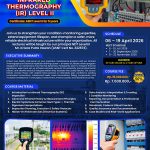
Protect your facility and power up your predictive maintenance program with our Infrared Thermography for Electrical Inspection training course — a hands-on, results-driven program designed to turn technicians into thermal detectives. Participants learn to interpret thermal signatures, select and set up infrared cameras, account for emissivity and environmental factors, and identify electrical hotspots before they escalate into costly failures. The course blends concise theory with realistic field exercises so attendees gain confidence reading overheated connections, imbalanced loads, loose terminations, failing components, and insulation breakdowns in switchgear, transformers, motors, busbars and distribution panels.
The curriculum blends core theory (thermal physics, emissivity, detector performance and measurement best practices) with practical workshops on camera selection, image acquisition, on-site scanning techniques, and advanced analysis — including how to set up repeatable inspection routes and trending programs that convert thermal anomalies into prioritized, actionable work orders. This course is aligned with internationally recognized qualification principles for thermography, helping learners meet ASNT requirements for thermographic condition monitoring and prepare to apply those competencies in the field. Join us to strengthen your condition-monitoring expertise, extend equipment lifespan, and champion a safer, more reliable electrical infrastructure within your organization. All lectures will be taught by our principal NDT Level III – Mr. Krisna Putra Irawan (ASNT Cert No. 322673).
Blended
10 Hari Online
2 Hari Offline
Schedule
• 06 – 19 April 2026
• 06 – 19 Juli 2026
• 07 – 20 September 2026
• 09 – 22 November 2026
Course Fee
Diskon 50%Rp. 15.000.000,-
Rp. 7.500.000,-
Certificate
ASNT Level II for 5 years
Course Material
1. Introduction to Infrared Thermography (IR) Inspection:
- Overview of certification requirements under ASNT SNT-TC-1A for Level II.
- Review of fundamentals infrared physics, heat transfer, emissivity, factors affecting thermal imaging (reflectivity, emissivity, background, environment).
- Refresher on camera operation, menus/interfaces, calibration, proper handling, and maintenance of IR equipment.
2. Advanced Infrared Theory & Measurement Principles:
- Detailed heat transfer mechanisms (conduction, convection, radiation) and how they apply in electrical inspections.
- Radiometry basics: emissivity, reflected apparent temperature, atmospheric effects, and their impact on accurate temperature measurement.
- Spatial resolution, thermal sensitivity, field-of-view, and how equipment specifications influence inspection capability.
3. Electric Systems & Common Fault Types — Thermal Signature Interpretations:
- Types of electrical installations and components typically inspected.
- Common electrical faults detectable by IR thermography.
- How thermal anomalies manifest: what to look for.
4. Inspection Planning, Execution & Safety Protocols:
- Pre-inspection planning.
- On-site inspection procedures.
- Use of checklists and standard operating procedures (SOPs) for consistent and repeatable inspections.
5. Hands-On Field Exercises (Electrical Systems):
- Practical sessions with real or simulated electrical installations.
- Use of IR cameras — practice adjusting emissivity, focus, detector settings, palette, span/level, distance, relative humidity compensation.
- Collecting thermal images, recording data under different load conditions, logging ambient conditions, recording observations.
6. Data Analysis, Interpretation & Trending / Condition Monitoring:
- Techniques for analyzing IR data.
- Trend analysis and baseline comparisons.
- Risk prioritization: assessing severity, urgency, categorizing findings, recommending corrective action and maintenance priorities.
7. Reporting, Documentation & Professional Communication:
- Structuring formal inspection reports.
- Documentation of test conditions, logbooks, site sketches or photos, ambient data, camera settings, emissivity used — ensuring traceability and reproducibility.
8. Standards, Codes & Ethical Practice:
- Overview of relevant standards and guidelines: ASNT SNT-TC-1A / employer’s written practice, applicable electrical safety standards (for safe inspection practices), and client-specific or regulatory standards as required.
- Ethical practice, competence, record management, reporting integrity, and professional responsibilities as Level II.
9. Quality Assurance and Documentation:
- Documentation requirements and reporting standards.
- Compliance with industry codes, standards, and regulations.
- Safety Considerations: Safety protocols and best practices for Infrared inspections.
- Hazards associated with electrical equipment.
10. Case Studies and Real-world Applications:
Untuk informasi tambahan, dapat menghubungi :
𝗖𝗵𝗮𝘁 𝘂𝘀 👉🏻 https://wa.me/+6287843214710
𝗖𝗵𝗮𝘁 𝘂𝘀 👉🏻 https://wa.me/+6281928545169